

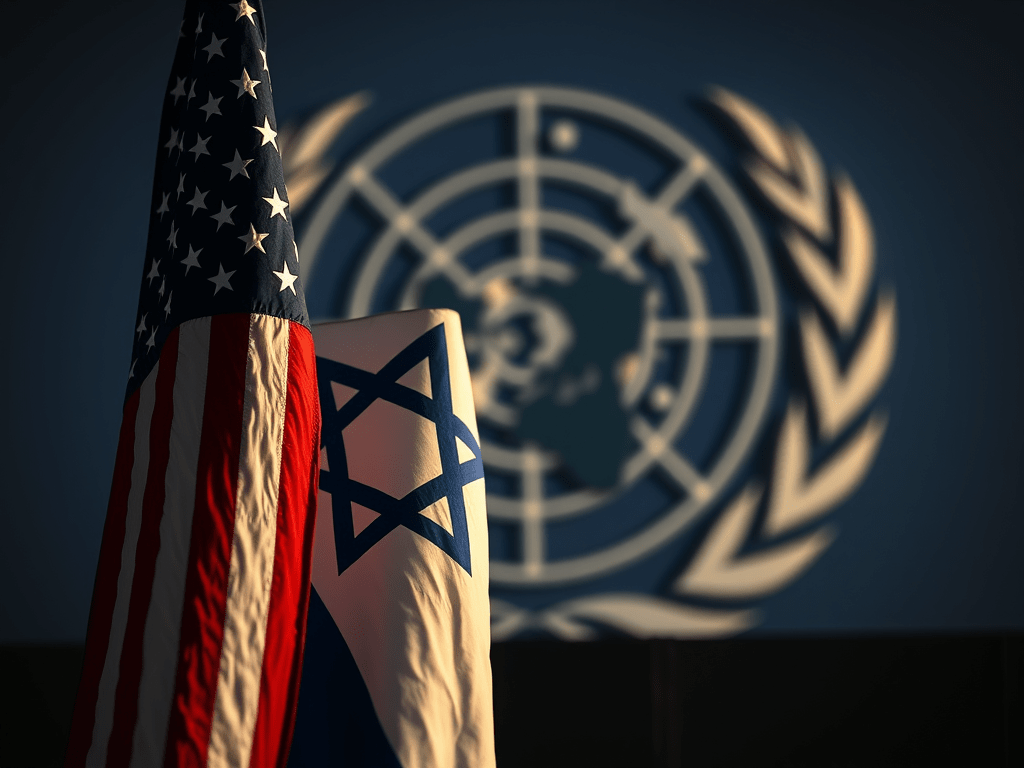
Geopolitical Protection
Israel receives strong diplomatic and military support from powerful allies, most notably the United States. This backing often shields it from consequences at the UN or in international courts.
- Veto power: The US has repeatedly used its veto in the UN Security Council to block resolutions critical of Israel.
- Military aid: Billions in annual US military assistance reinforce Israel’s strategic position.
This protection creates a kind of immunity, not legal, but political.

Media Framing and Narrative Control
Global media coverage often reflects the perspectives of powerful states. In many Western outlets, Israeli actions are framed as “self-defence,” while Palestinian resistance is labelled as “terrorism.”
- Language matters: Terms like “clashes” or “conflict” obscure power imbalances.
- Selective coverage: Civilian casualties in Gaza may receive less sustained attention than attacks inside Israel.
This framing shapes public perception and reduces pressure for accountability.
Fragmented International Law Enforcement
International law exists, but enforcement is weak and politicised.
- ICC investigations: The International Criminal Court has opened inquiries into alleged war crimes, but progress is slow and contested.
- Double standards: Some countries face sanctions or trials for similar actions, while others, including Israel, face little consequence.
Without consistent enforcement, legal norms lose their power.
Diplomatic Normalisation
In recent years, Israel has signed agreements with several Arab states (e.g., UAE, Bahrain, Morocco) under the Abraham Accords.
- These deals shift regional priorities away from Palestinian rights and toward economic and strategic interests.
- Normalisation reduces pressure on Israel to change its policies, even as occupation and violence continue.
Internal Political Dynamics
Israel’s government, especially under right-wing leadership, often frames military actions as necessary for national security.
- Domestic support for these policies can be strong, especially during times of fear or conflict.
- Critics within Israel, including human rights groups, often face marginalisation or backlash.
This internal dynamic reinforces external impunity.
So how does Israel “get away with it”?
Through a combination of powerful allies, strategic media framing, weak international enforcement, regional deals, and domestic political support.
But “getting away with it” doesn’t mean escaping scrutiny forever. Civil society, human rights organisations, and global movements continue to document, protest, and demand accountability. The question now is whether the world will listen and act.

Final Thought
Impunity is not destiny. It’s a choice made by systems that prioritise power over justice. The more people ask hard questions like yours, the harder it becomes to ignore the cost of silence.






 Bloggyness
Drop a Thought, Stir the Pot