

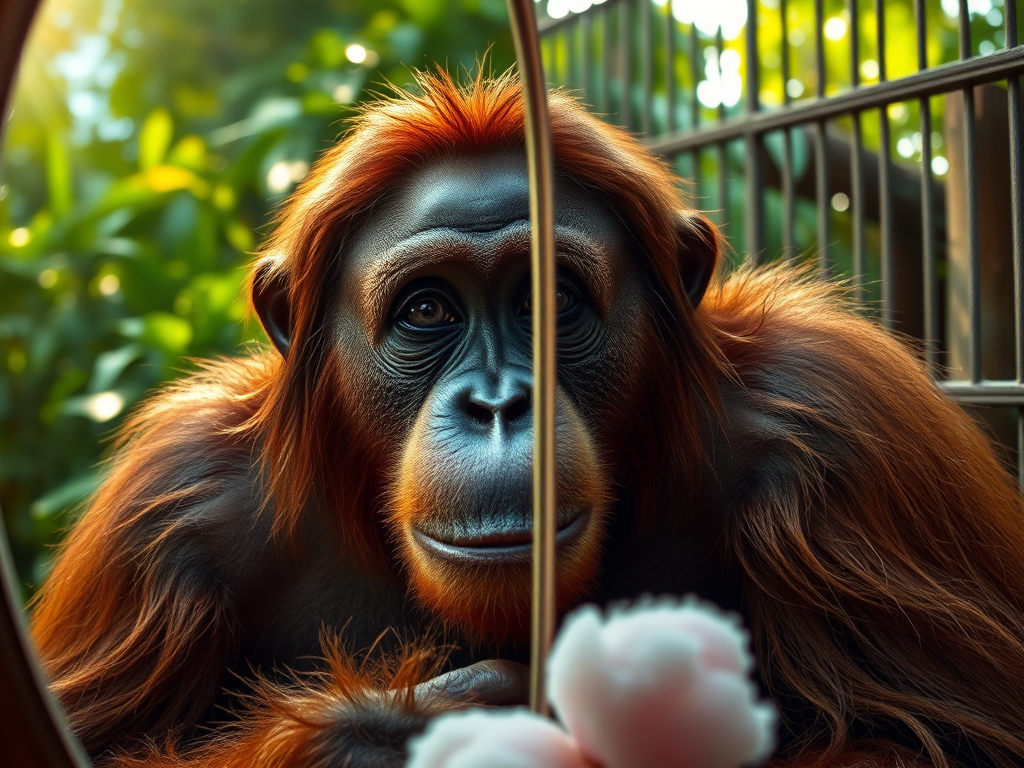
A field guide to ethical whiplash, captive charm, and the blurry line between care and curiosity

Welcome to the Paradox
Zoos are places where you can eat a hot dog while watching a tiger pace.
- Where conservation posters sit next to slushie machines.
- Where endangered species are bred in captivity and then sold in plush form at the gift shop.
It’s not just strange. It’s structurally contradictory. Zoos are part sanctuary, part spectacle. And they’ve been trying to reconcile that duality since the Victorian era.
The Case for Zoos
Let’s honour the good first:
- Conservation: Zoos have helped save species like the California condor, the scimitar-horned oryx, and the golden lion tamarin.
- Education: Seeing animals up close can spark empathy, curiosity, and a lifelong love of nature.
- Research: Controlled environments allow scientists to study behaviour, reproduction, and health, often to support wild populations.
- Funding for wild protection: Some zoos channel ticket revenue into habitat preservation and anti-poaching efforts.
In this framing, zoos are lifeboats. Imperfect, yes, but vital.
The Case Against Zoos
Now the hard truth:
- Captivity stress: Wide-ranging animals like elephants, big cats, and whales often suffer in confined spaces.
- Ethical discomfort: Keeping sentient beings behind glass for entertainment raises moral questions.
- Greenwashing: Not all zoos are conservation-focused. Some use the language of care to justify poor conditions or profit-driven practices.
- Loss of wildness: Animals bred in captivity may never return to the wild. They become ambassadors, not survivors.
In this framing, zoos are prisons with good PR.
The Cotton Candy Problem
Zoos are also fun.
- There are ice cream stands, face painting booths, and animatronic dinosaurs.
- Children laugh. Parents relax.
- The animals become part of the backdrop, a kind of living wallpaper for leisure.
This isn’t inherently bad. But it blurs the line between education and entertainment, care and consumption. And when the tiger becomes just another photo op, something sacred gets lost.
The Evolution of the Modern Zoo
The best zoos are evolving:
- Naturalistic enclosures
- Enrichment programmes
- No more dolphin shows or elephant rides
- Focus on species that thrive in captivity, not suffer in it
But the worst ones? Still stuck in the old model: cages, crowds, and cotton candy.
What Zoos Reveal About Us
Zoos aren’t just about animals. They’re about humans.
- Our desire to protect and control.
- Our curiosity and our cruelty.
- Our ability to justify contradiction with a smile and a snack.
The zoo is a mirror. And the reflection is complicated.
Zoos are both sanctuary and spectacle
They rescue and restrict. They educate and entertain. And they sit at the heart of a cultural paradox: we want to save animals but also look at them.
The real question isn’t whether zoos should exist. It’s what kind of zoos we’re willing to support, and whether they serve animals more than audiences.

Final Thought
If conservation is the goal, cotton candy can’t be the priority. Zoos must evolve not just in design, but in purpose. Because the tiger isn’t just a photo op. It’s a being. And the enclosure isn’t just a fence. It’s a question.
Explore more with us:
- Browse Spiralmore collections
- Read our Informal Blog for relaxed insights
- Discover Deconvolution and see what’s happening
- Visit Gwenin for a curated selection of frameworks
 Bloggyness
Drop a Thought, Stir the Pot