

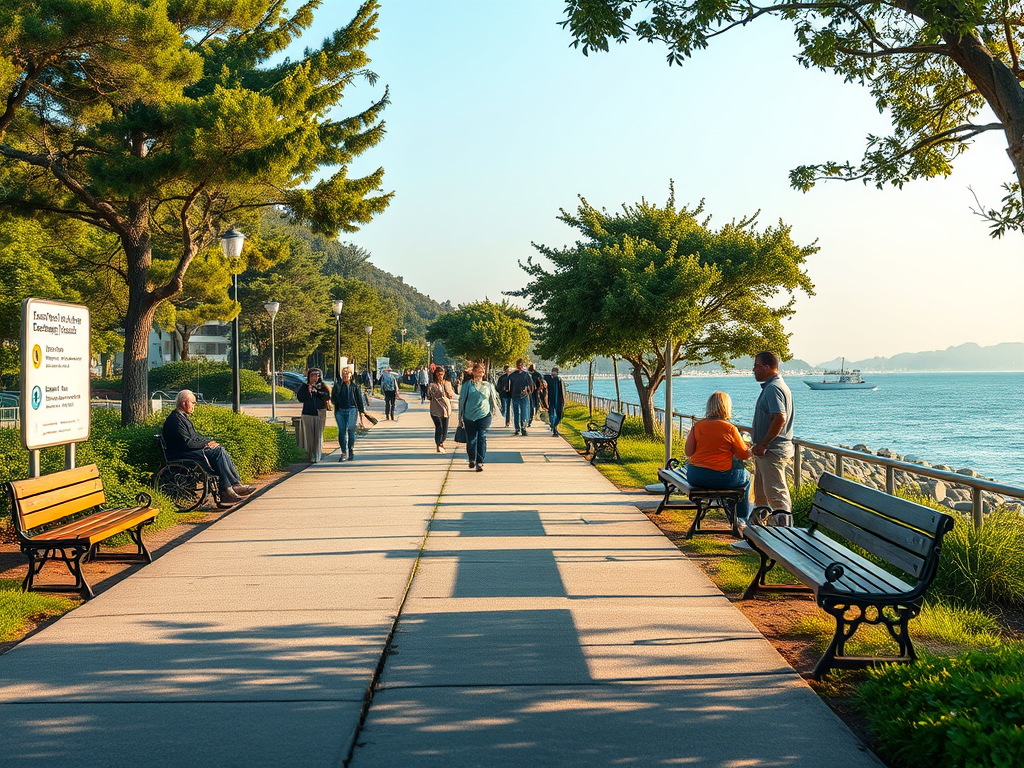
Inclusion isn’t just a feature, it’s a feeling

What Inclusion Feels Like (Before It’s Named)
It’s the slope that meets your stride.
The signage that speaks your language.
The bench is placed exactly where rest becomes a possibility.
It’s the warmth of a space that says, “You belong here,”
without needing to say it aloud.
Inclusion isn’t just a checkbox.
It’s a choreography.
A kind of spatial empathy.
The Quiet Confidence of Being Considered
There’s a difference between being accommodated and being anticipated.
- A coastal path with tactile markers that whisper “we thought of you”
- A train station with clear audio cues and calm lighting that says “we didn’t forget you”
- A community garden with wide gates and shared tools that hum “you’re part of this”
These aren’t just features.
They’re feelings.
They’re an emotional infrastructure built into the landscape.
What Inclusive Design Actually Does
- It shifts how you feel in your body
- It softens your breath
- It changes your posture from guarded to grounded
- It turns navigation into an invitation
- It transforms space into care
Inclusion isn’t just access.
It’s welcome.
It’s dignity.
It’s the geography of belonging.
Logic Says…
- Design is emotional, not just functional
- Architecture can be an act of care
- Wayfinding is also soul-finding
- Rest stops are relational infrastructure
- A ramp isn’t just a slope; it’s a signal
- Inclusion is felt before it’s noticed

Final Thought
Have you discovered a trail, stop, or public space that felt truly inclusive?
Maybe it was a gesture.
A conversation.
A design choice that shifted how you felt in your body, in your breath, in your belonging.
Let’s celebrate those spaces.
Let’s name the moments where geography became generosity.
Let’s honour the places that didn’t just let us in but made us feel welcome.
Explore more with us:
- Browse Spiralmore collections
- Read our Informal Blog for relaxed insights
- Discover Deconvolution and see what’s happening
- Visit Gwenin for a curated selection of frameworks
 Bloggyness
Drop a Thought, Stir the Pot