
(A slightly sassier wander through the madness)
When “Just Living” Became a Performance Review
There was a time, gather round, children, when doing something was enough. You fancied a walk? You walked. You were hungry? You cooked. The light looked pretty. You took a photo. You had a day where you achieved absolutely nothing? Nobody staged an intervention.
Now? Oh no. Now even relaxing comes with a user manual and a progress bar.
Apparently, the rest needs KPIs. Apparently, sleep needs analytics. Apparently, your weekend needs a mission statement.
We’ve turned life into a self‑improvement obstacle course, and honestly… who signed the consent form for this?
The Great Optimisation Spiral (Please Keep Your Arms Inside the Ride)
Optimisation is a slippery little creature. There’s always another level. Another tweak. Another “hack” that promises to turn you into a shinier, more efficient human.
Walk further. Sleep longer. Read more. Earn more. Improve your morning routine. Improve your evening routine. Improve your optimisation routine.
At some point, you have to ask: What exactly are we trying to win? There’s no final boss. No end‑screen saying: “Congratulations, you achieved 87%, human.”
Yet here we are, acting like life is a speedrun.
Even Our Hobbies Are Applying for Jobs
Hobbies used to be a joy. Now they’re LinkedIn profiles waiting to happen.
You like photography? Sell your prints. You enjoy cooking? Start a food account. You like walking? Track every step. You enjoy gardening? Document the process. You draw? Build a portfolio. You knit? Etsy shop incoming.
It’s not that turning a hobby into something more is bad; it’s that we’ve forgotten the radical concept of doing something just because it feels nice.
Sometimes a cake is just a cake. Sometimes a walk is just a walk. Sometimes your badly played guitar is… well, still badly played. And that’s fine.
The Productivity Panic
Productivity isn’t the villain. The villain is the idea that every moment must produce something.
Waiting for a train? Check your phone. Five minutes before an appointment? Emails. Walking? Podcast. Lunch? Watch something. Garden? Photograph it. Can’t sleep? Learn a skill.
We’ve become allergic to empty space. As if boredom is a moral failing.
But boredom used to be the quiet room where ideas wandered in uninvited. A thought while washing dishes. A solution while walking. A memory while staring out a window.
That wasn’t inefficiency. That was being human.
Optimisation as a Polite Form of Self‑Loathing
Here’s the spicy bit. Optimisation can become a socially acceptable way of saying: “I’m not quite enough yet.”
Another habit. Another target. Another version of yourself is waiting around the corner.
It sounds admirable until you realise how exhausting it is to treat yourself like a never‑ending renovation project.
Sometimes you don’t need fixing. Sometimes you’re just tired. Sometimes it’s simply Tuesday.
The Internet: A Daily Parade of Perfect People
Of course, the internet pours petrol on this fire.
Someone has the perfect morning routine. Someone has read 100 books. Someone runs a business from a van. Someone wakes at 5 am. Someone journals, meditates, meal‑preps, colour‑codes, and achieves enlightenment before breakfast.
And there you are, sitting still, feeling like you’re falling behind.
Even though you’re not.
Maybe “Good Enough” Is the Real Luxury
“Good enough” has become unfashionable, like wearing socks with sandals, but spiritually.
Yet sometimes it’s wisdom.
A meal doesn’t need to be nutritionally perfect. A walk doesn’t need a step count. A book doesn’t need to teach you anything. A weekend doesn’t need an itinerary. A photograph doesn’t need to be Instagram‑worthy. A day doesn’t need to be productive.
Some days are simply days. And that should be allowed.
Not Everything Needs Improving (Calm Down, Spreadsheet Brain)
Improvement is wonderful. Progress matters. Learning matters.
But not everything needs to be better.
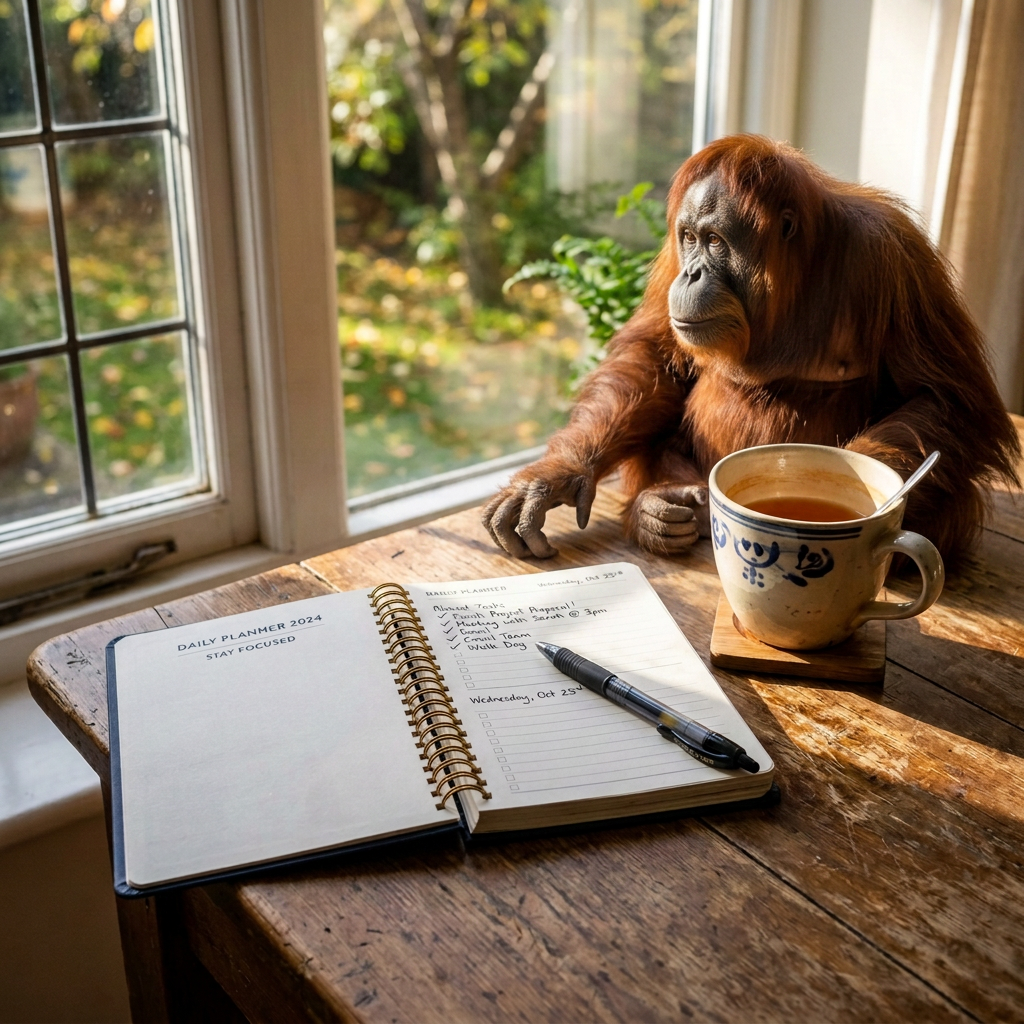
Sometimes the answer to “How can I improve this?” is: You don’t. It’s fine. Sit down. Drink your tea.
The Quiet Rebellion of Leaving Things Alone
There’s something deliciously rebellious about refusing to optimise.
A half‑read book. A hobby that never becomes a business. A garden that’s charmingly chaotic. A walk with no recorded distance. An afternoon with no measurable outcome.
These things don’t need to be improved. They just need to be lived.
Life isn’t a project plan. There is no ROI on joy.
If we optimise everything, we risk becoming very efficient at missing the point.
The Radical Act of Doing Absolutely Nothing
Next time you feel the urge to improve something, pause. Ask whether it actually needs improving. Or whether it was already perfectly good.
Because sometimes the most productive thing you can do is nothing at all. And sometimes the bravest form of self‑improvement is deciding you don’t need to improve anything today.
Sassy enough, love?
Leave a Reply