
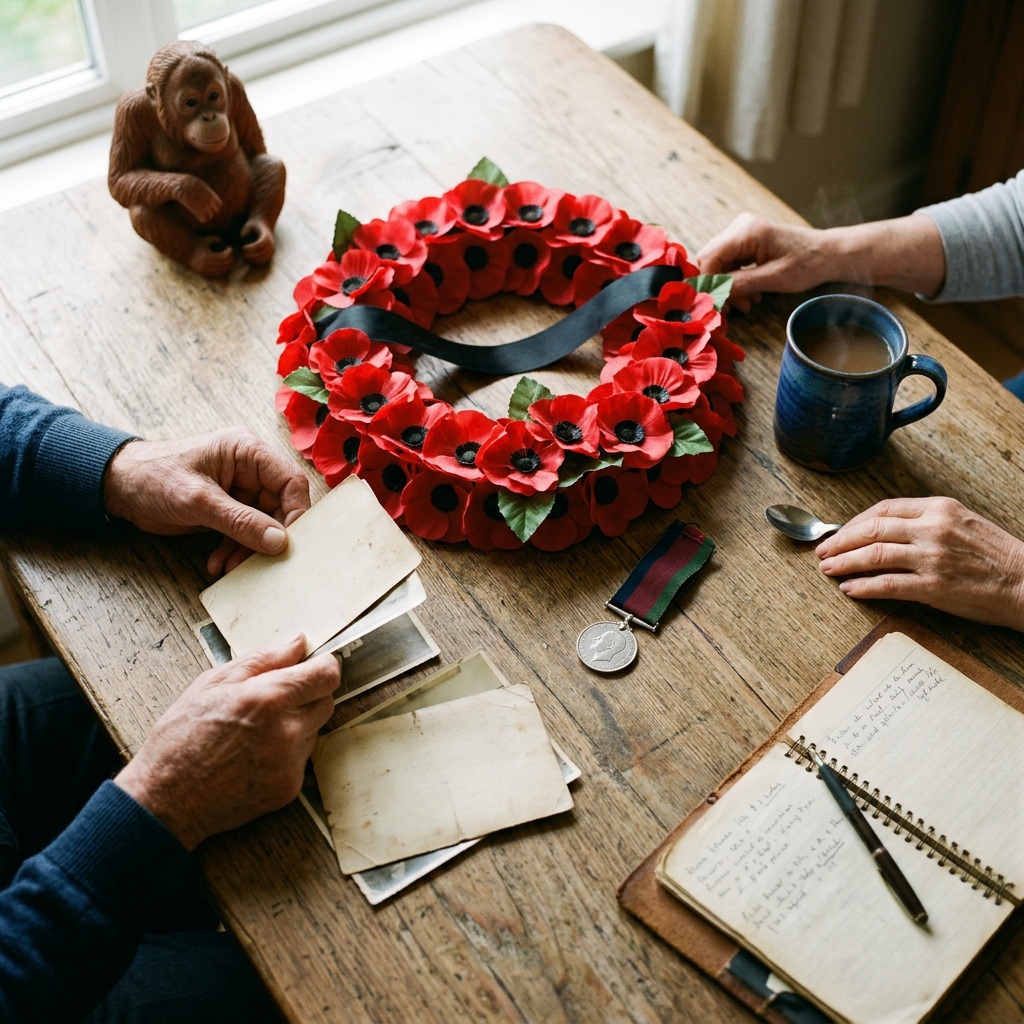
Remembering those who served also means supporting those who return home.
Every November, we pause to remember.
We remember those who gave their lives, those who served in conflicts around the world, and the families who carried the burden of separation, uncertainty, and loss. We wear our poppies, observe the silence, and reflect on the sacrifices made in the name of service.
But there is another part of remembrance that deserves far greater attention.
What happens to those who come home?
For many servicemen and women, leaving the armed forces is not simply the end of a career. It can mean losing the structure, identity, camaraderie, and sense of purpose that have shaped much of their adult lives.
The transition from military to civilian life can be challenging. Some return with physical injuries. Others carry psychological scars that are far less visible. Many face difficulties adjusting to civilian employment, securing suitable housing, managing finances, or accessing appropriate healthcare.
For some, the difficulties begin long after their final day in uniform.
The challenges that do not end with military service
Military service can leave lasting consequences, and not all of them are immediately apparent.
Physical injuries, chronic pain, post-traumatic stress, anxiety, depression, and difficulties adjusting to civilian life can continue long after someone has left the forces.
The challenge is not simply recognising that these problems exist. It is ensuring that former service personnel can access appropriate support without having to fight another battle just to obtain it.
The NHS provides dedicated services, including Op COURAGE for mental health and wellbeing, and Op RESTORE for physical health conditions related to military service.
These are important services, but their existence should not lead us to assume that every veteran’s needs are being met.
Finding the right service, understanding eligibility, navigating referrals, and dealing with different organisations can itself become an additional burden for someone already struggling.
When the uniform comes off, the responsibility remains
Leaving the armed forces can mean losing more than a job.
For many, military life has provided a strong sense of belonging, routine, identity, and mutual support. Suddenly moving into an unfamiliar civilian environment can be an enormous adjustment.
Employment opportunities may not always reflect the skills and experience acquired during service. Families may face financial pressures. Those with injuries or mental health difficulties may find that the support available does not adequately reflect the complexity of their circumstances.
The Royal British Legion’s guidance on transition and resettlement recognises that leaving the armed forces can be one of the biggest changes experienced by members of the Armed Forces community.
It is a reminder that transition should not be treated as a single event. It is a process that can take considerable time and may require continuing support.
A system of support that needs to work in practice
There are organisations doing important work to help former service personnel and their families.
The Veterans UK Welfare Service provides welfare assistance, while the Royal British Legion offers practical, financial, and emotional support.
The government’s Find support for veterans and their families guidance also brings together information covering healthcare, housing, employment, finances, and other areas of veteran welfare.
More recently, the VALOUR programme has been introduced to improve access to support across the UK by connecting veterans and their families with relevant services.
These initiatives are welcome. However, we must look beyond the existence of individual organisations and ask whether the overall system is accessible, coordinated, and responsive enough.
Are veterans receiving help before difficulties become crises?
Are people who have served being supported through the transition into civilian employment and family life?
Can someone who is struggling with their physical or mental health find the right assistance without repeatedly explaining their circumstances to different organisations?
And are families receiving the support they need when they are also affected by the consequences of military service?
These are questions that deserve more than an annual discussion in November.
Remembering must mean taking responsibility.
There is something uncomfortable about celebrating the courage, commitment and sacrifice of our armed forces while acknowledging that some former service personnel struggle to obtain the support they need after leaving.
We should never assume that because someone has returned home, their service-related difficulties have ended.
Nor should we expect veterans and their families to navigate complicated systems alone.
Charities, veteran organisations, and dedicated individuals provide invaluable assistance. But charitable goodwill should complement an effective and accessible system of public support, not become its substitute.
The responsibility to support those who have served should be shared by government, public services, employers, communities, and society as a whole.
Remembrance should be more than remembering the fallen. It should also mean looking after the living.
This Remembrance Day, let us remember those who never came home.
But let us also remember those who did, and who may still be fighting battles that few people can see.
Let us remember the veterans struggling with injuries, isolation, mental health difficulties, financial pressures, and the challenges of rebuilding their lives.
Let us remember their families, too.
And perhaps, most importantly, let us recognise that gratitude should extend beyond words, ceremonies, and symbolic gestures.
It should be reflected in the practical support we provide, the services we make accessible and the commitment we maintain long after someone has left the armed forces.
Because service does not lose its value when the uniform comes off.
And neither should our responsibility.
Lest We Forget.
Leave a Reply